15 Best Haircuts for Men with Thinning Hair (And What to Tell Your Barber)
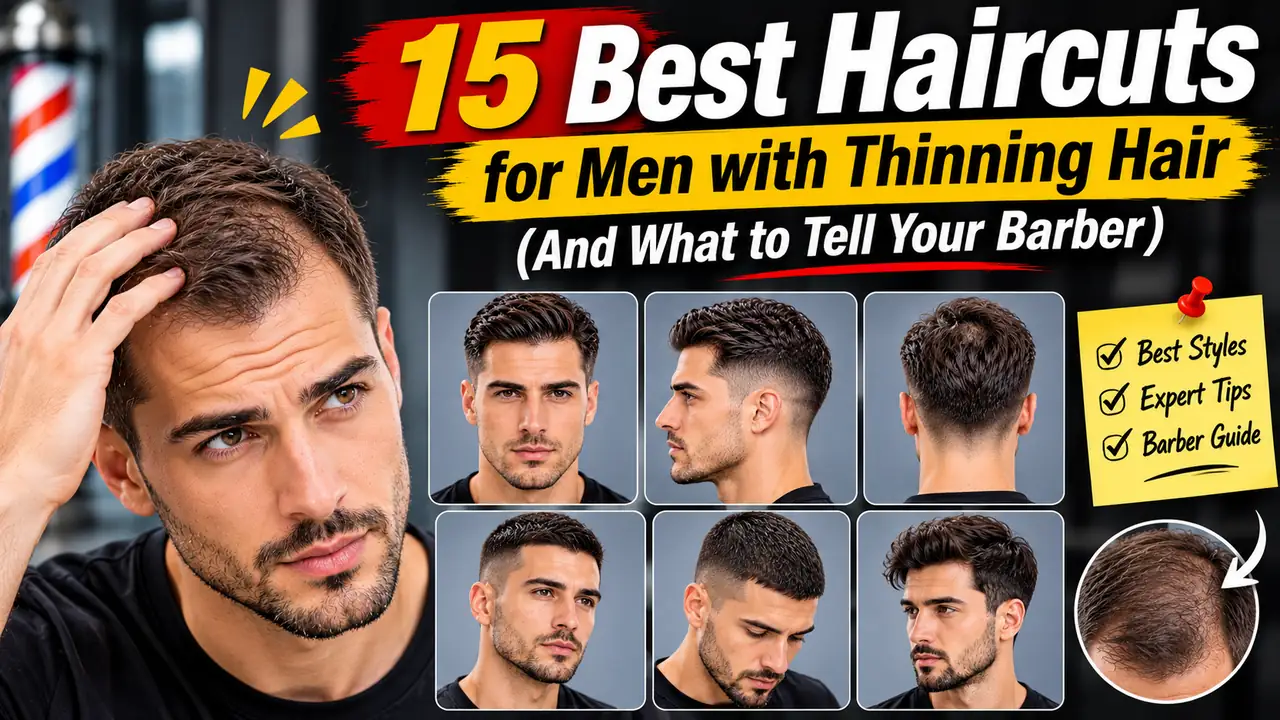
Haircuts for men with thinning hair don’t have to hide anything. The right cut makes thinning look intentional, not obvious. See all 15 cuts below, from 4 angles each, and pick the one that fits your pattern.
15 Best Haircuts for Men with Thinning Hair
Group A: Very Short Haircuts
1. Buzz Cut




Barber’s Take
Why This Cut Works
Cut: A buzz cut keeps one short, even length that is slightly longer and softer than an induction cut, so less scalp shows while the contrast between dense and thin areas is still reduced.
⚠ The trade-off is honesty: a buzz hides nothing, so head shape, scalp tone, and harsh overhead light all become part of the look.
✂ Ask your barber to taper the neckline and around the ears, even on a buzz, because that finish makes it look deliberately cut.
2. Induction Cut




Barber’s Take
The Case for Going This Short
Cut: The induction cut is the shortest, fully uniform cut on this list, with one very short length all over, so it shows the most scalp and removes any contrast between longer and shorter areas.
⚠ The trade-off is that this is the least forgiving cut on the list, since head shape, bumps, and uneven scalp tone all show.
✂ Before the clippers come out, ask your barber to check your head shape from the back in the mirror with you, and agree whether a slightly longer buzz would balance it better.
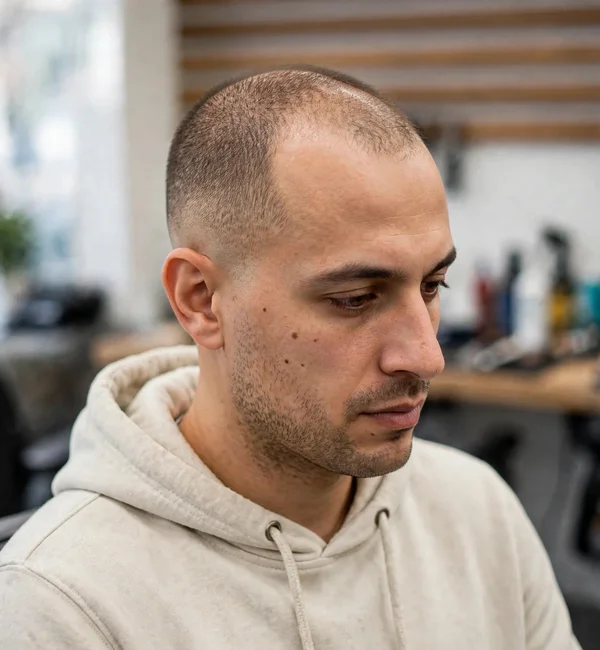
3. Crew Cut
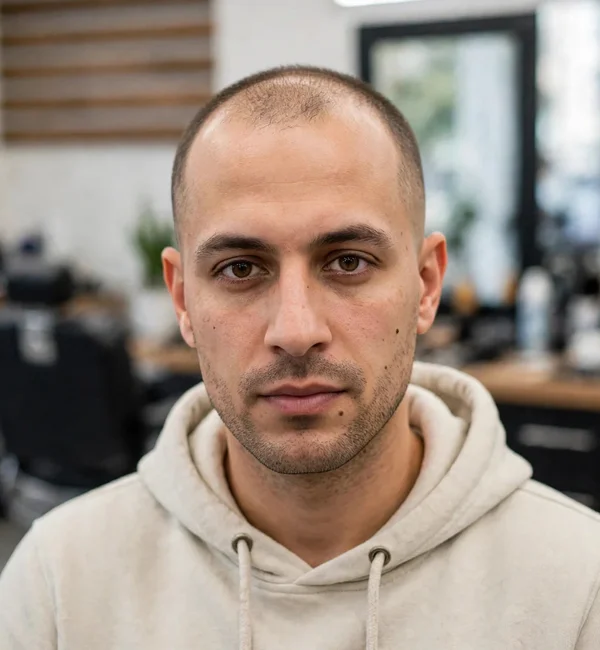
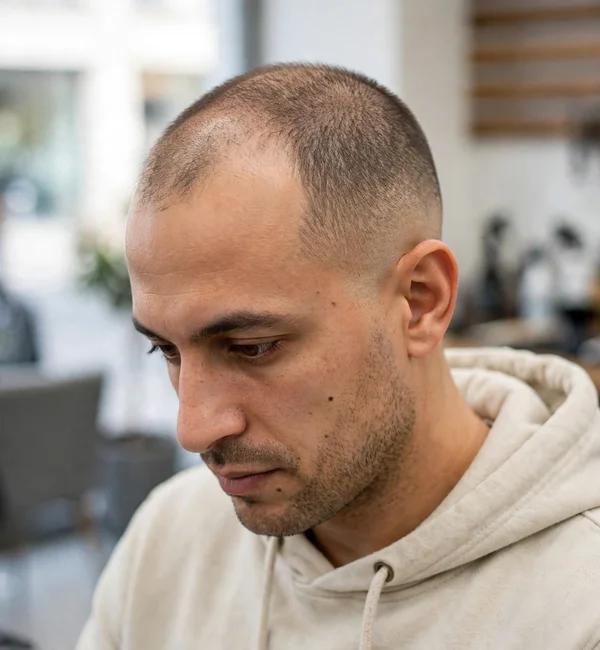
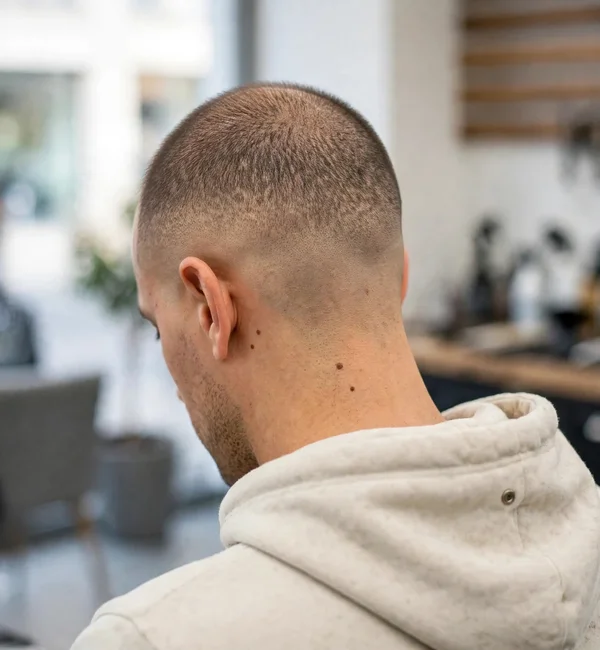
Barber’s Take
A Clean Outline Without a Fringe
✓ A crew cut gives you a frame of short sides, a slightly longer top, and a tidy front edge, without asking a fringe to do work it cannot do.
⚠ The tipping point is top length, because a fraction too long and the front separates into thin strands, especially at the temples.
✂ Ask your barber to point-cut the very front edge instead of cutting it straight across, since a soft, broken line sits more naturally over thinning temples.
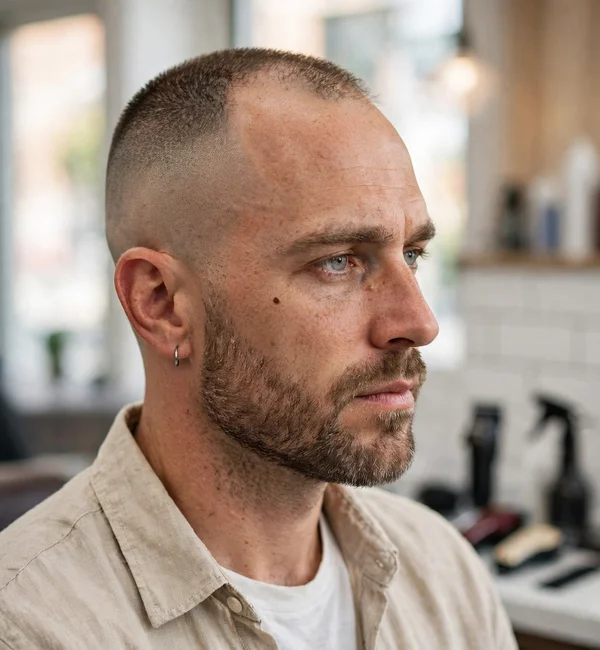
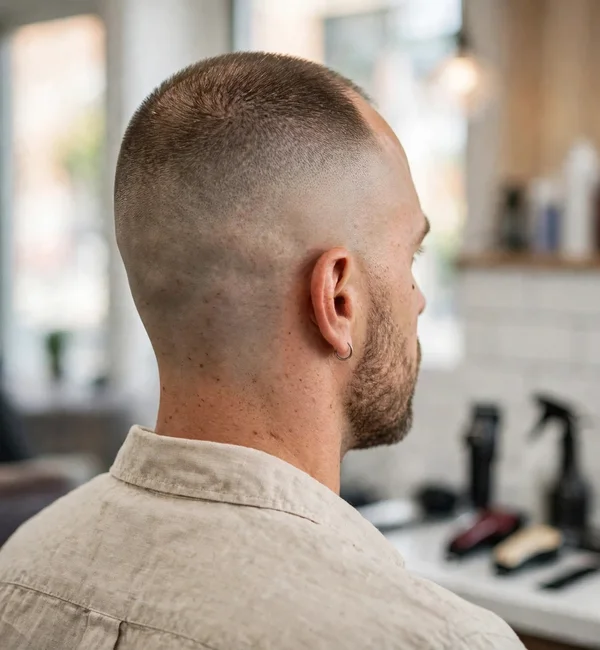
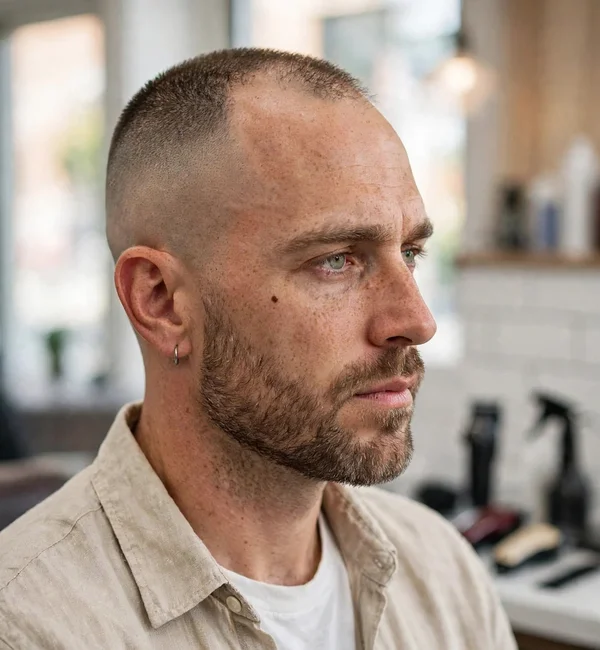
4. High and Tight

Barber’s Take
Sharp Shape, Careful Height
✓ The appeal here is silhouette, because very short sides and a compact top create a crisp, structured shape that looks deliberate from the front and the side.
⚠ The risk is isolation, since a high, sharp transition can turn a thin top into an island, with bare sides below and sparse hair above.
✂ Ask your barber to set the short area below the curve of the crown and blend the top edge with scissors over a comb, so the top stays connected to the sides.
5. Shaved Head
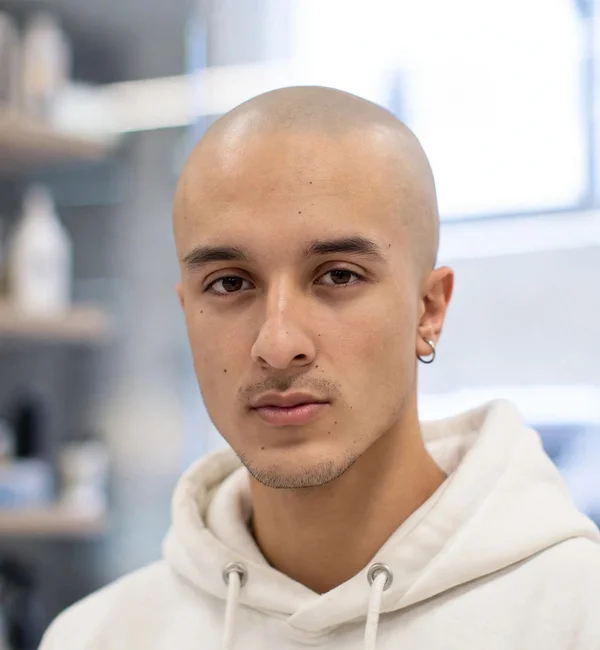
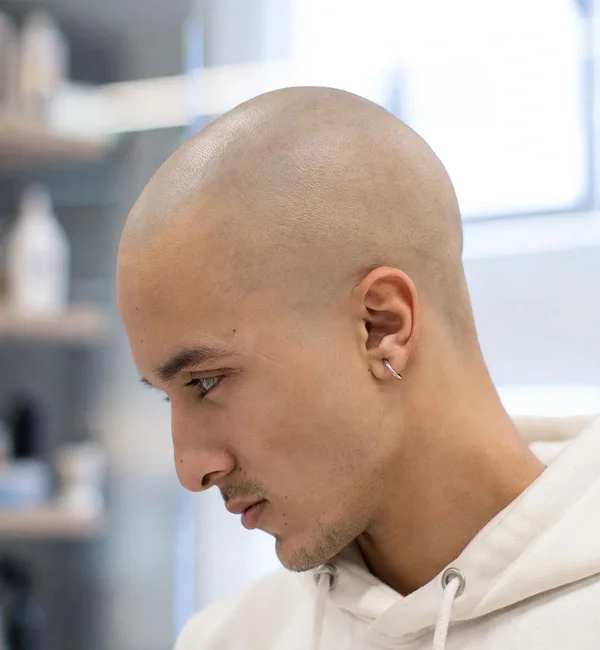
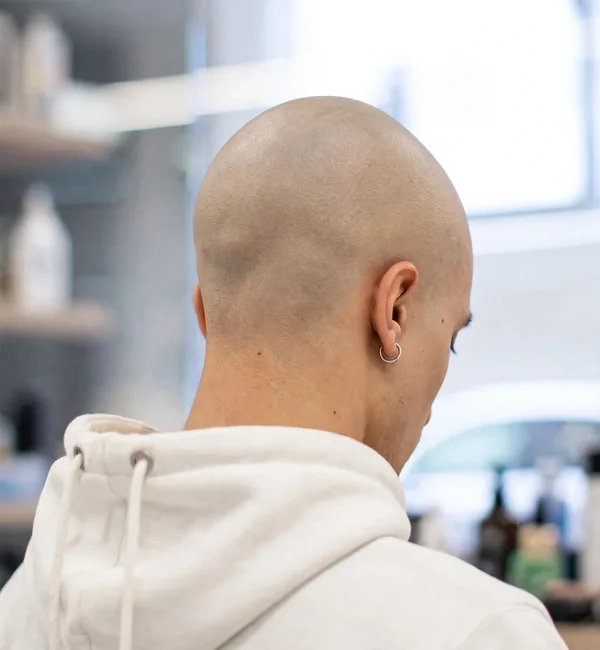
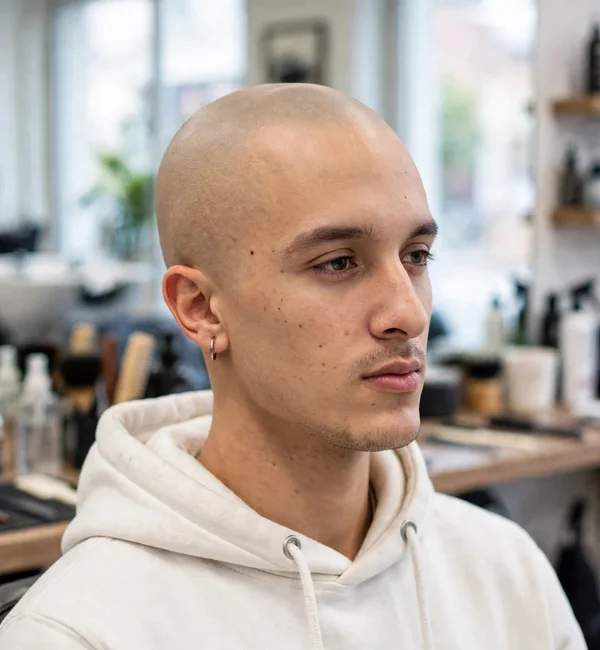
Barber’s Take
One Finish, No Pattern Left to Read
✓ A shaved head replaces an uneven density pattern with a single finish, so there is no thin zone left to compare against a thick one.
⚠ The trade-off is exposure of a different kind, because without hair to soften the outline, face and head shape carry the whole look.
✂ Have your barber do the first shave in the shop, and ask them to map any moles, scars, or sensitive spots and show you the razor direction for each area.
Group B: Cropped and Fringe Haircuts
6. Caesar Cut

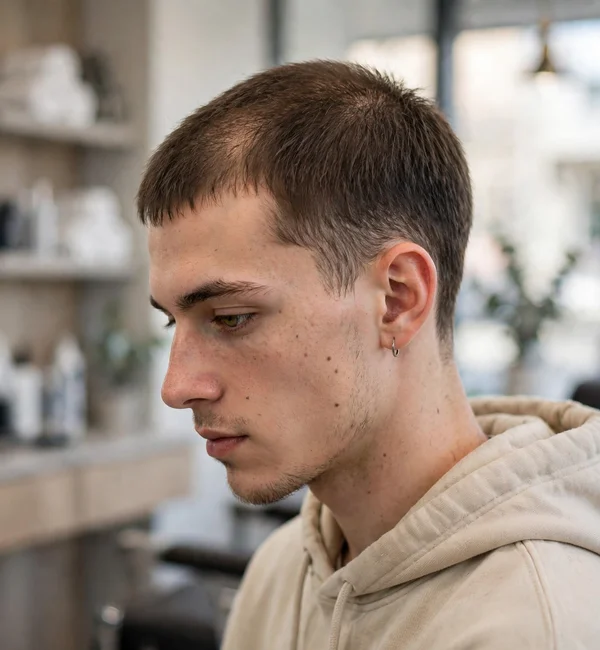
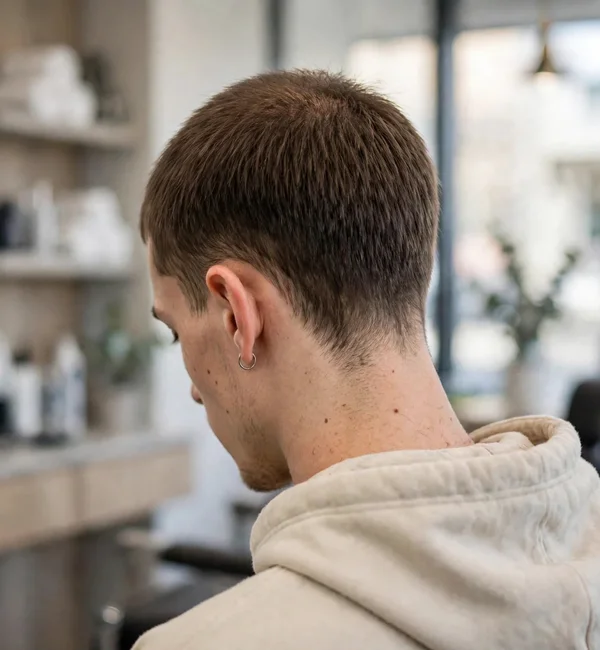
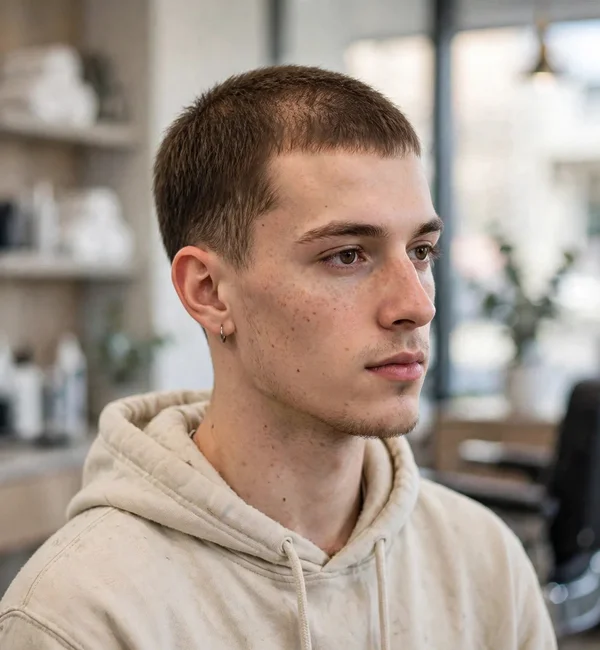
Barber’s Take
Fringe as a Redirect
✓ A Caesar works by redirecting the eye, since the short forward fringe gives the front a clear line to follow instead of the receding temples behind it.
⚠ The catch is fringe density, because if the fringe itself is sparse, it separates into strands and draws the eye straight to the gaps.
✂ Ask your barber to cut the fringe with the hair falling naturally forward, not combed wet and stretched flat, since hair cut wet and tight springs back thinner when dry.
7. French Crop


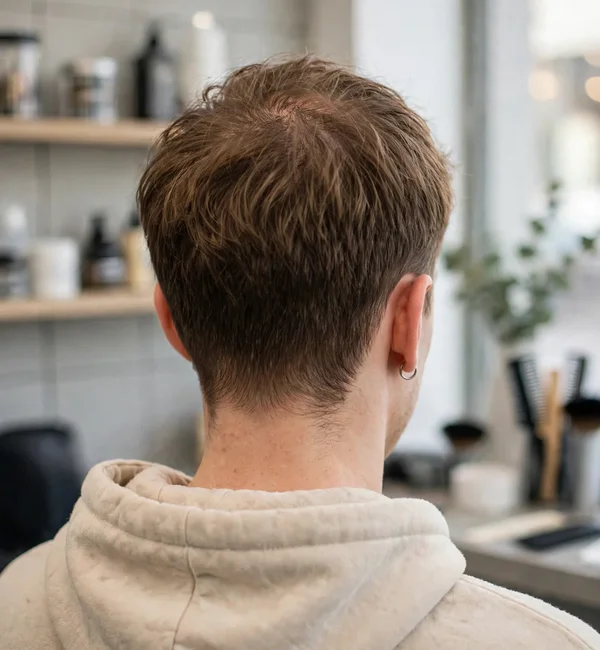

Barber’s Take
Texture That Breaks Up Flat Hair
✓ A French crop adds movement where a flat cut would show every thin patch, because the choppy top and short fringe break the surface into texture.
⚠ The limit is top density, since on a very fine, sparse top, heavy texturing can make the ends look wispy instead of full.
✂ Ask your barber to texture only through the mid-lengths and leave the fringe edge solid, so the blunt edge preserves the fringe line while the texture above adds movement.
8. Textured Crop with Low Fade
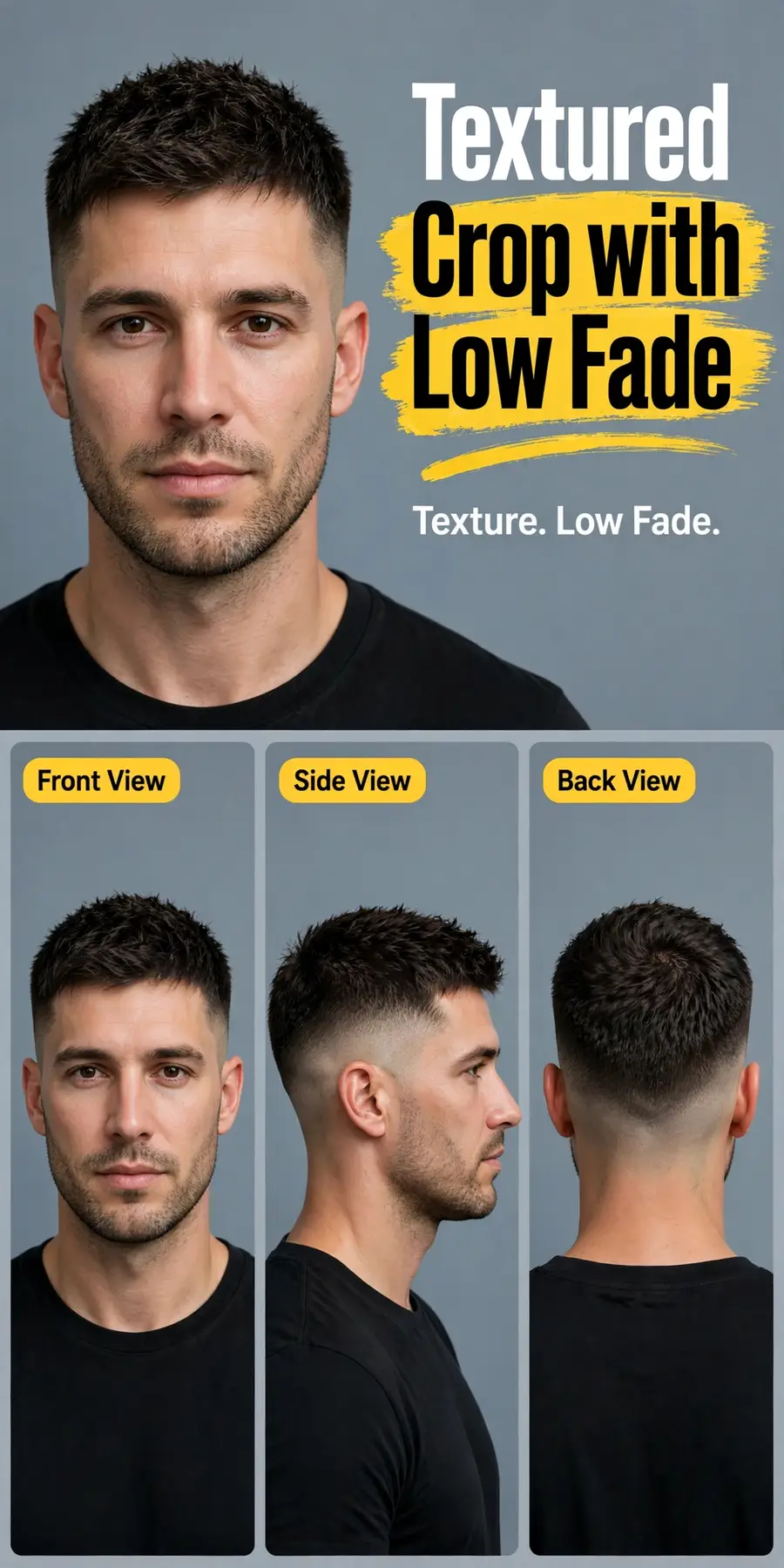
Barber’s Take
Texture Without the High Contrast
✓ Keeping the fade low is what makes this crop kind to thinning hair, because the sides stay tidy while no high skin line frames a thin crown.
⚠ The trade-off is upkeep at the edges, since a low fade grows out visibly at the neckline and around the ears sooner than a longer taper.
✂ Ask your barber to keep the fade below the top of the ear and blend it into your natural hairline, rather than cutting a hard line that frames the top.
9. Taper with Brushed-Forward Fringe
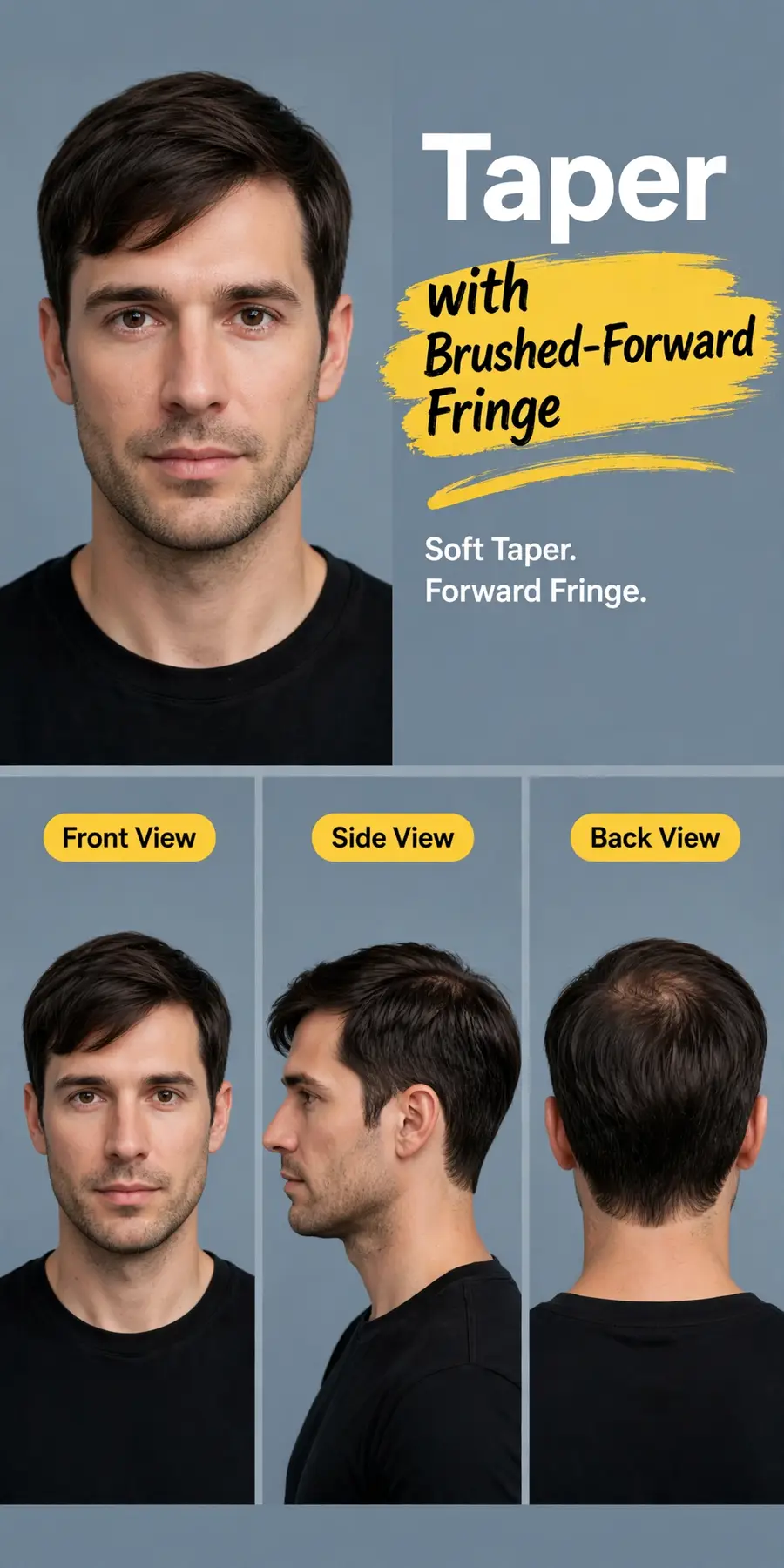
Barber’s Take
Soft Edges, Gentle Coverage
✓ A taper is softer than a fade, and that softness is the advantage, because gradual shortening toward the neck and ears keeps the top from looking thin by comparison.
⚠ The weakness is length creep, since once the fringe grows past the brow or starts to separate, the soft look turns untidy and stops covering anything evenly.
✂ Ask your barber to taper around the ears with scissors rather than clippers alone, because a scissor taper leaves a softer edge with no visible step.
Group C: Side and Classic Haircuts
10. Short Side Part
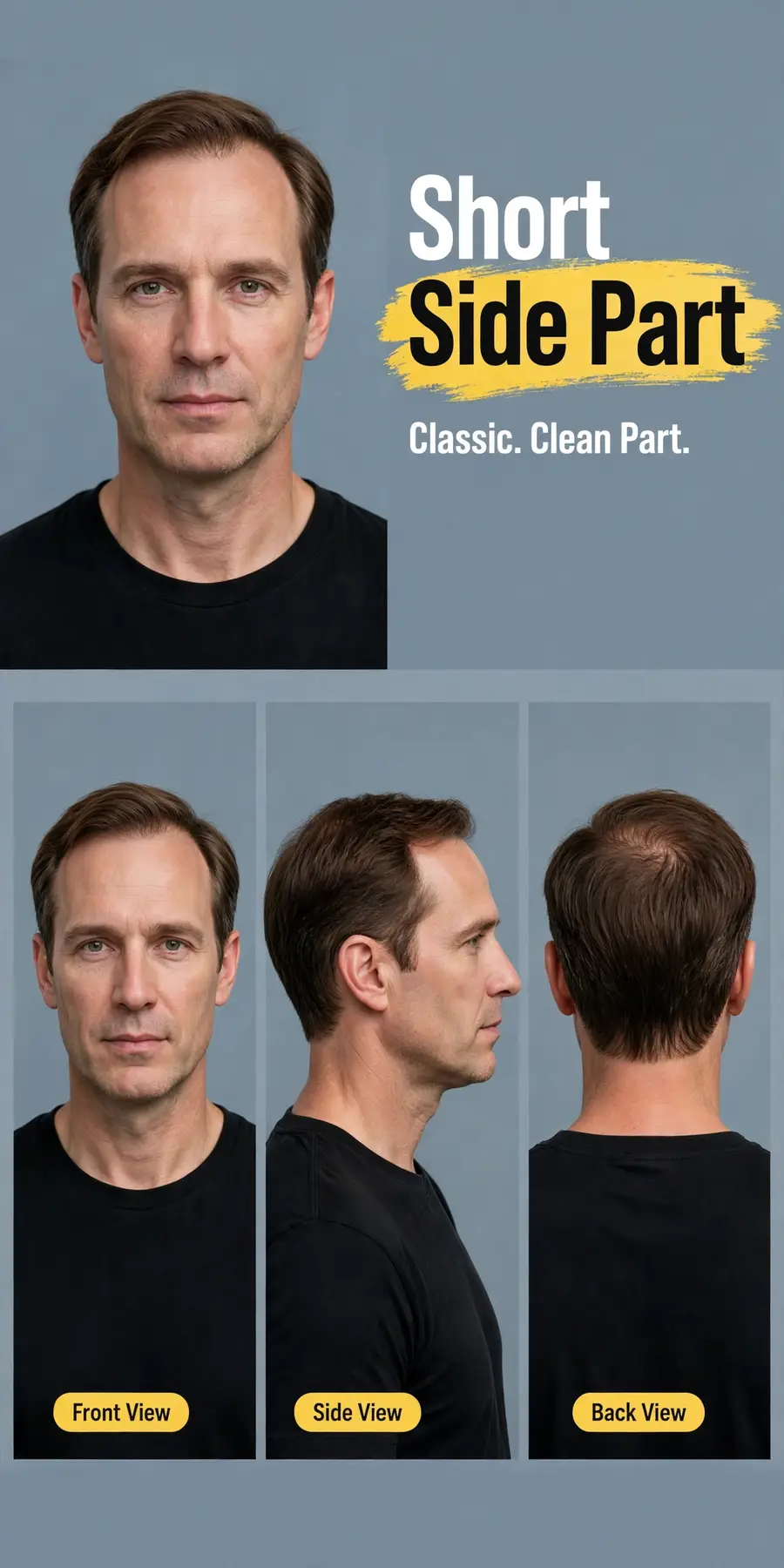
Barber’s Take
Structure That Organises Thin Hair
✓ A side part gives thin hair a job, with one clear direction and one clean shape, and no loose sections falling wherever they like.
⚠ The risk sits right on the part line itself, because if the hair around the part is sparse, a sharp hard part can expose scalp along the line.
✂ Ask your barber to find the part where your hair naturally falls, rather than forcing one against your growth direction, since a natural part holds all day with less product.
11. Ivy League
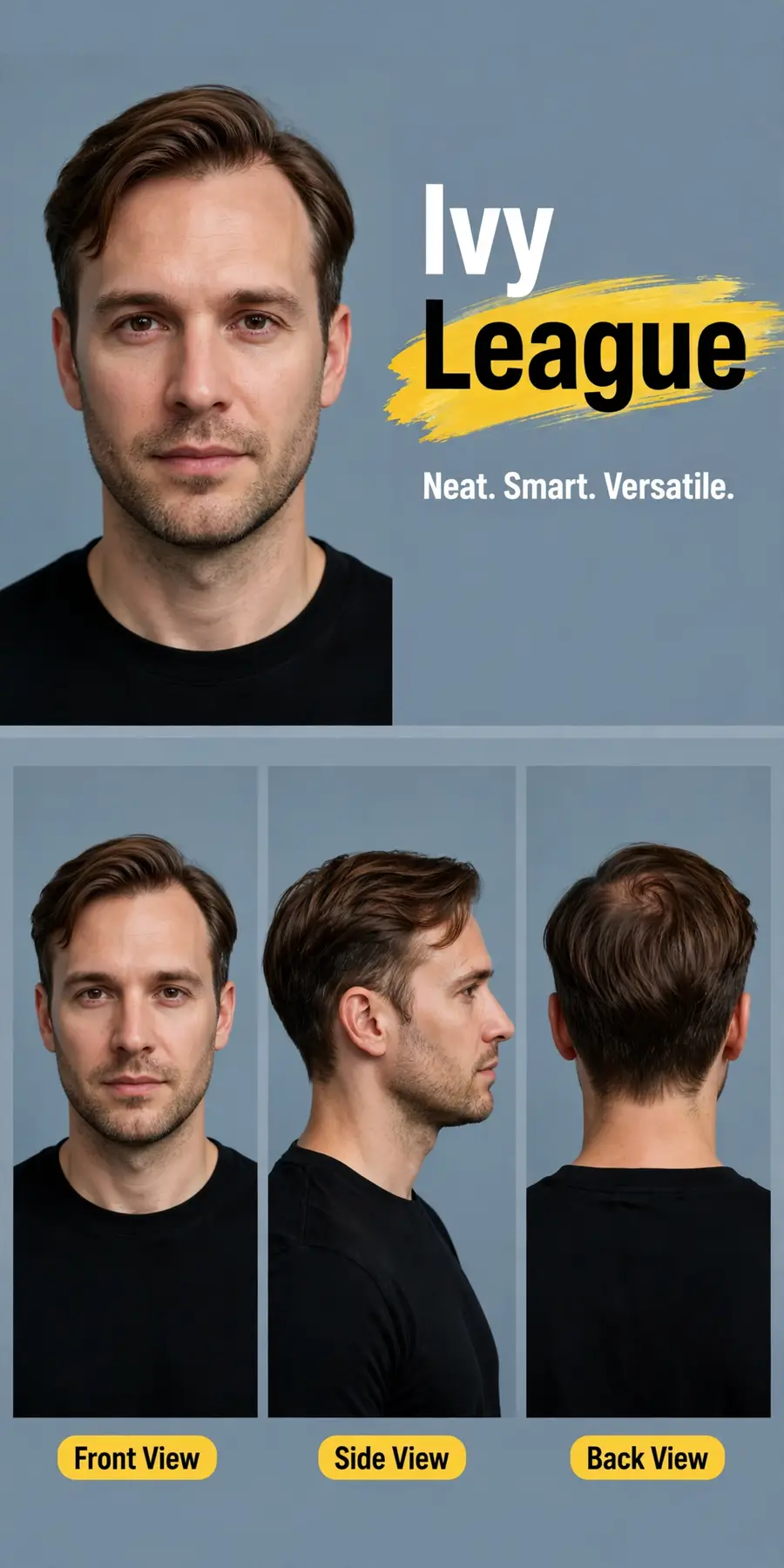
Barber’s Take
A Longer Top That Still Behaves
✓ The Ivy League is a crew cut with manners, with slightly more length on top, enough to sweep to the side, and a refined finish that still stays short enough to behave.
⚠ Without enough front density, though, the sweep is the problem, because it separates into sparse sections and the crown shows the moment the hair moves.
✂ Ask your barber to leave the front slightly longer than the crown, since that weight at the front is what the sweep needs, while a shorter crown keeps the shape balanced.
12. Short Slick Back with Taper
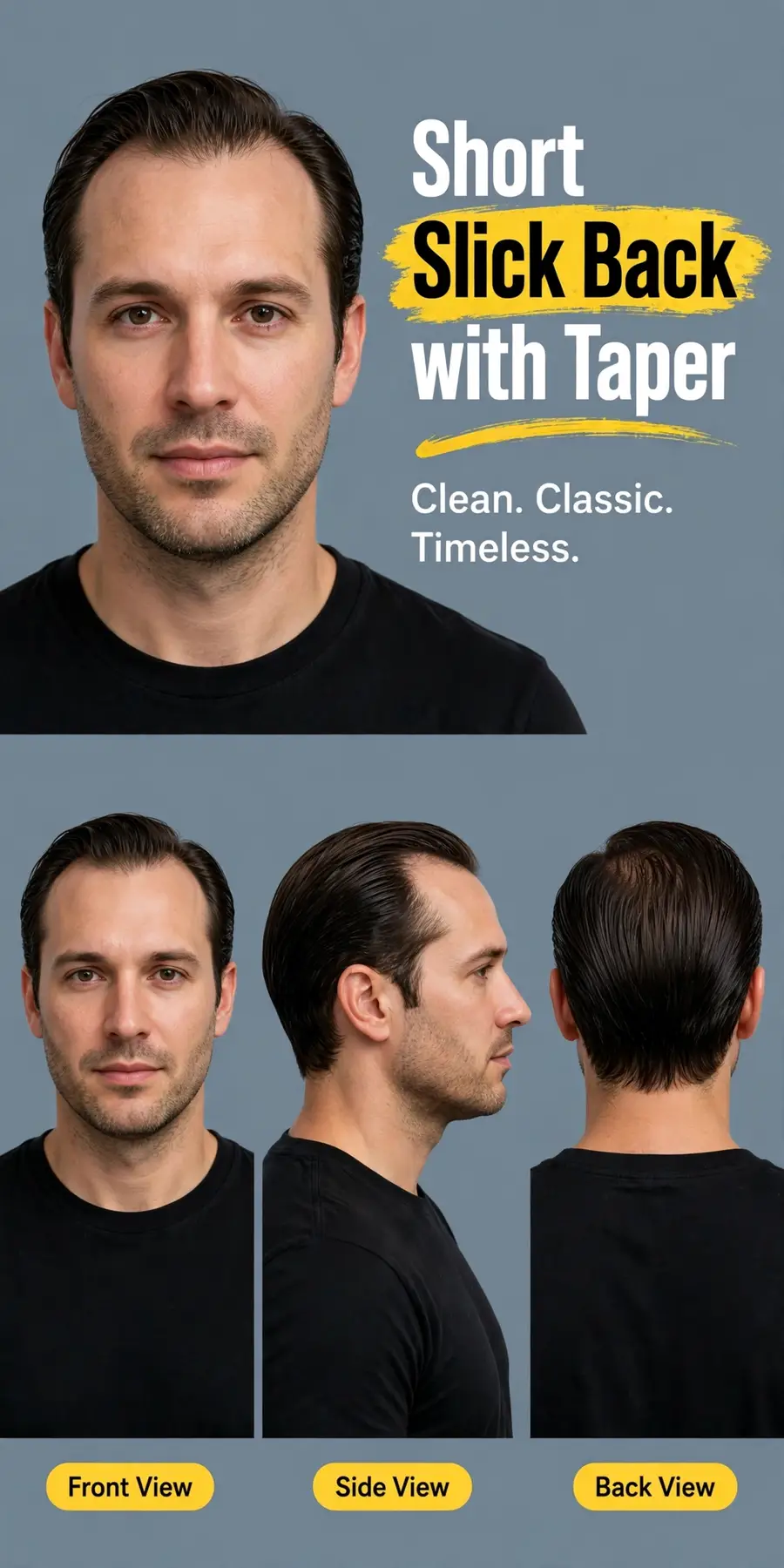
Barber’s Take
Control Instead of Length
✓ A short slick back works because it chooses control over length, staying short and tapered so it holds all day without the separation a long slick back shows on thin hair.
⚠ The trade-off is direction, because combing everything backward pulls hair away from the hairline and can expose the temples and the crown.
✂ Ask your barber to cut the top with a slight graduation from front to back, so the hair naturally falls backward on its own instead of needing to be pulled tight.
Group D: Textured and Fade Haircuts
13. Short Textured Quiff
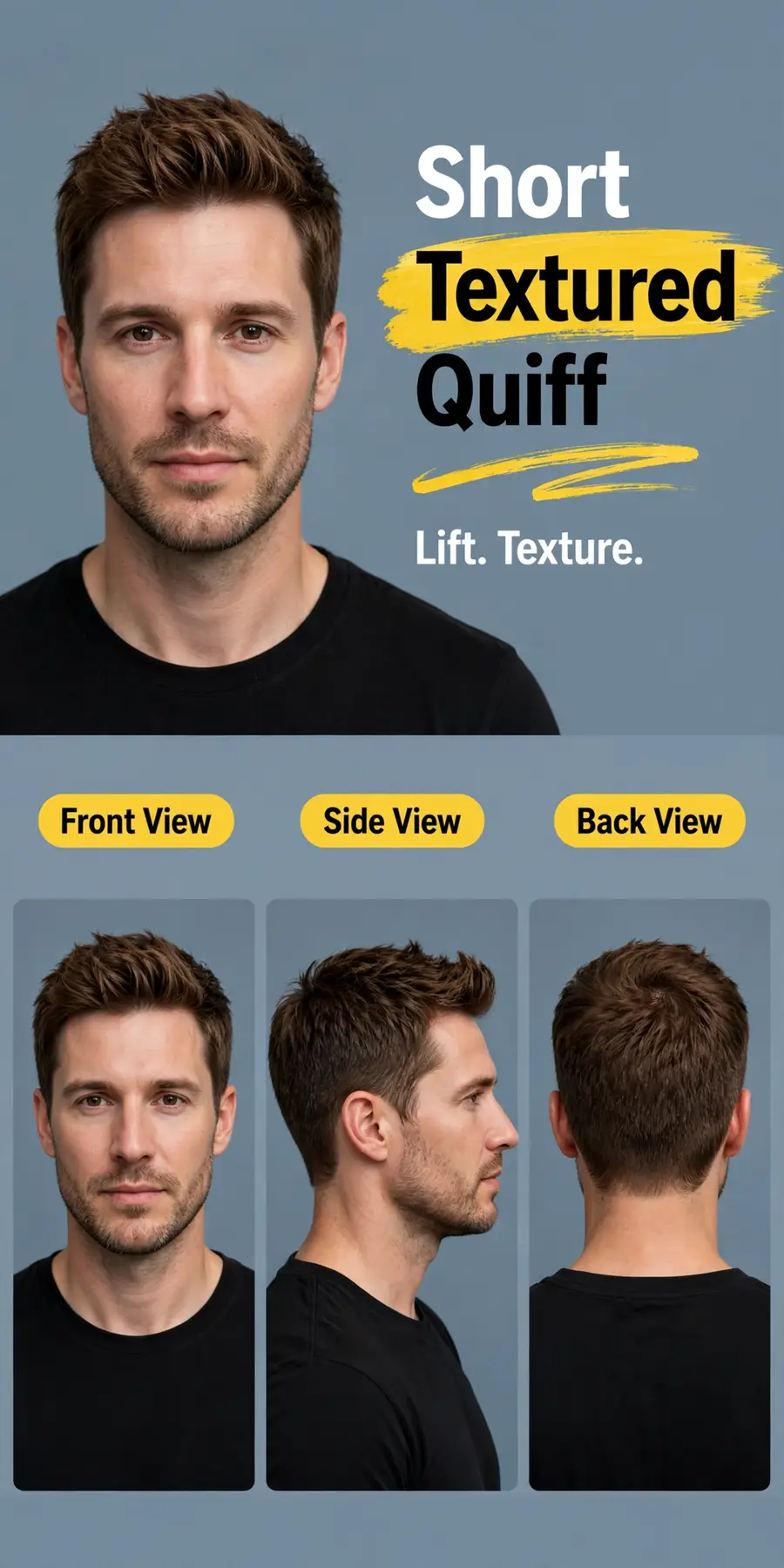
Barber’s Take
Lift Where It Counts, Nowhere Else
✓ A short quiff uses modest lift at the front to frame the face and draw the eye upward, while texture stops the front from looking flat.
⚠ Too much height breaks the deal, because a tall front on a thin top looks disconnected from the rest of the head, and the crown behind it becomes more visible.
✂ Ask your barber to build lift only in the front two inches and keep the crown flat, since that boundary keeps the quiff looking like one connected cut.
14. Skin Fade with Messy Top
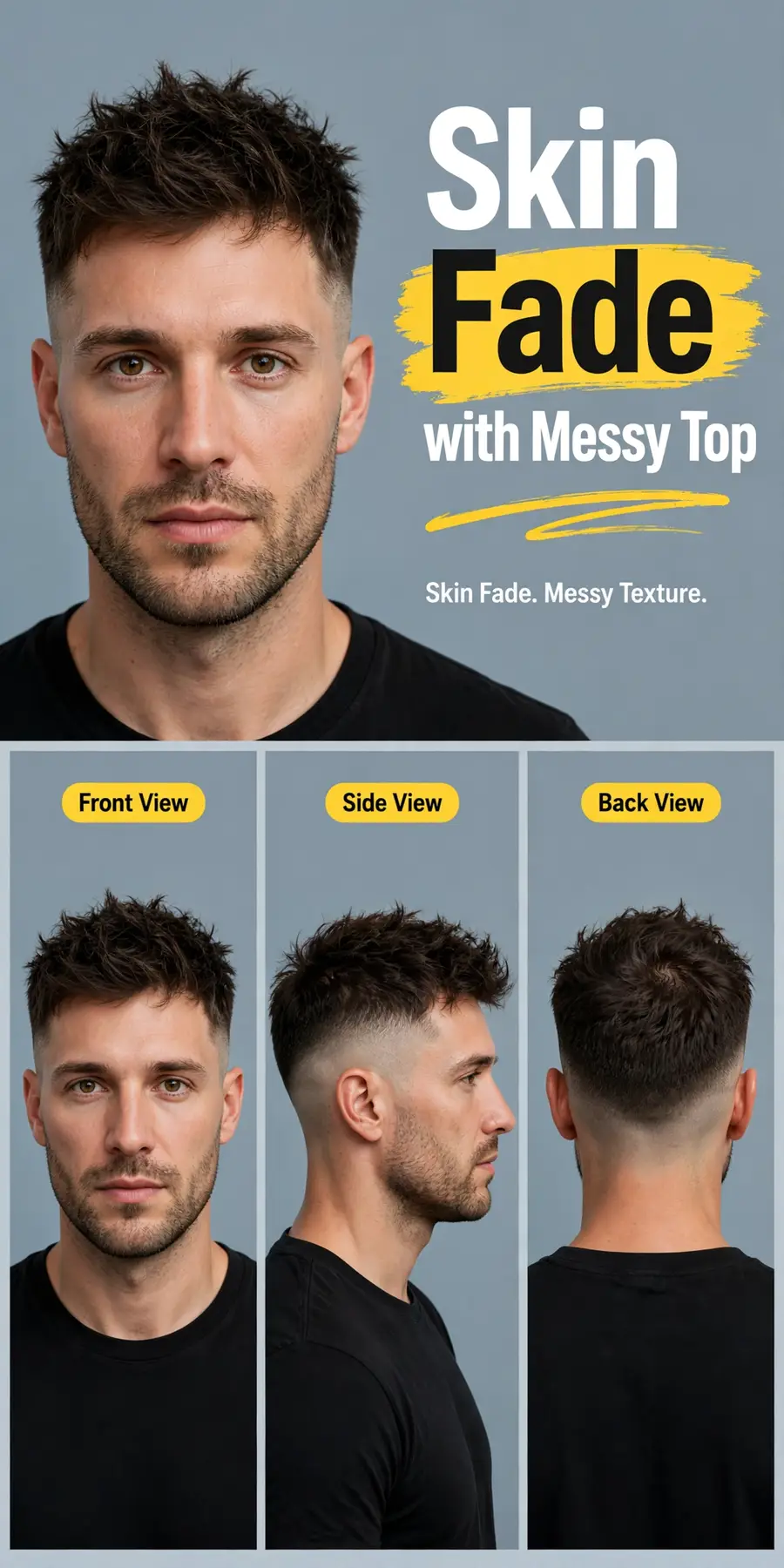
Barber’s Take
Contrast That Needs Density to Carry It
✓ A skin fade with a messy top is striking because the contrast does the talking, with bare sides and a textured top that looks intentional when the top holds its end.
⚠ That is also the risk, because skin next to a sparse top is the highest contrast in this guide.
✂ Before going skin-tight, ask your barber to check your top density under the shop light, and start with a softer fade if it looks thin.
15. Bald Fade with Beard
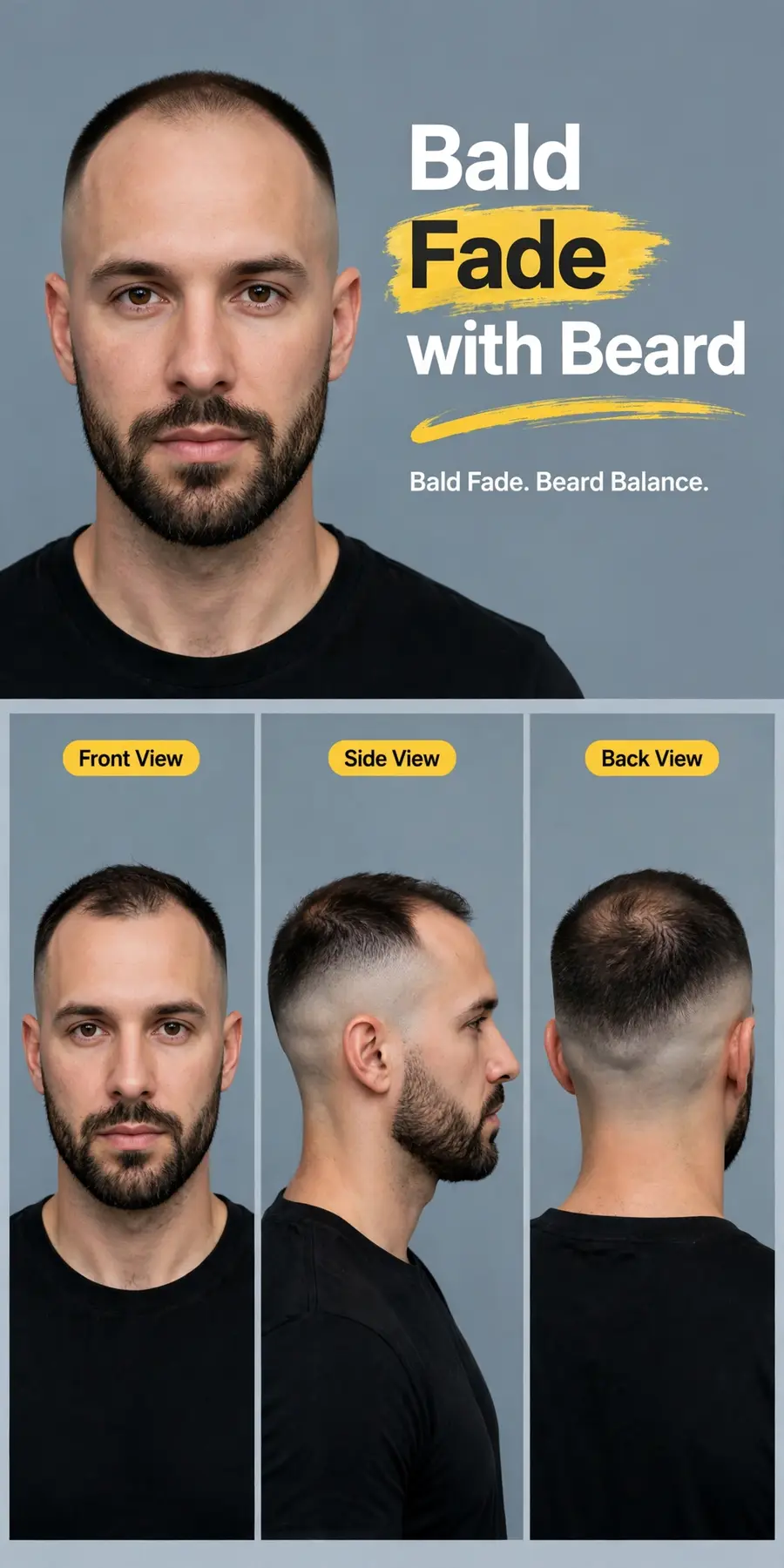
Barber’s Take
Shifting the Visual Weight Down
✓ This combination works by moving the visual weight, since a bald fade and a shaped beard frame the lower face even when the top is thin.
⚠ The catch is that it depends on the beard, because a patchy beard next to a precise fade looks unfinished.
✂ Ask your barber to blend the fade into the beard as one continuous line at the jaw, not as two styles that stop at the ear.
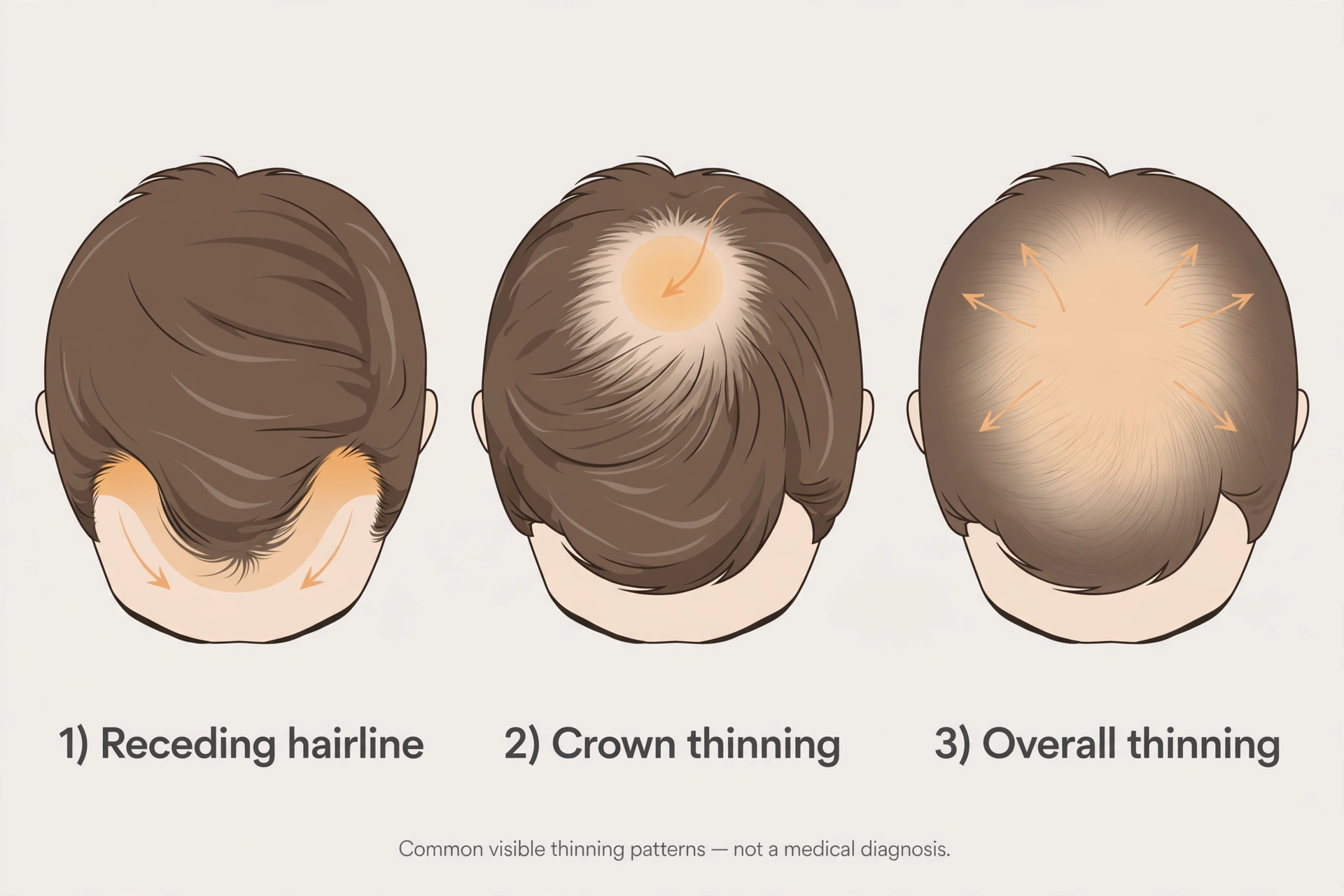
First, Understand Your Thinning Pattern
Before you choose a style, take a clear look at where density has changed most, because that pattern should drive the cut more than any trend.
These descriptions are visual only, and they are not a medical diagnosis.
So a barber who can see your density, growth direction, and head shape in person will always add useful context.
1. Receding Hairline
With a receding hairline, the temples or the front hairline have moved back while the crown may still have reasonable density behind them.
Styles that work well here often use a short forward fringe, a controlled side direction, or an even short length, rather than forcing a straight front line that looks artificial.
The aim is a shape that looks intentional on its own terms, not a style that depends on hair covering an area where density is no longer there.
2. Crown Thinning
Crown thinning, also called vertex thinning, means the hair around the crown appears less dense and the scalp becomes more visible under overhead light.
Hair at the crown often grows in a natural whorl, and that growth direction matters, because a long thin top can separate and show the crown more clearly.
Very short sides with a long thin top can increase that contrast, while a more balanced length can help the crown look more even overall.
3. Overall Thinning
Overall thinning means density is reduced across a larger area of the scalp, not only at the temples or crown, and that wider change makes long styles harder to manage.
Long hair can fall flat and show more scalp when it is parted or pushed in one direction, especially when it separates into thin sections.
Shorter length does not add density, but it can make the remaining hair look more even and easier to style in a consistent way each morning.
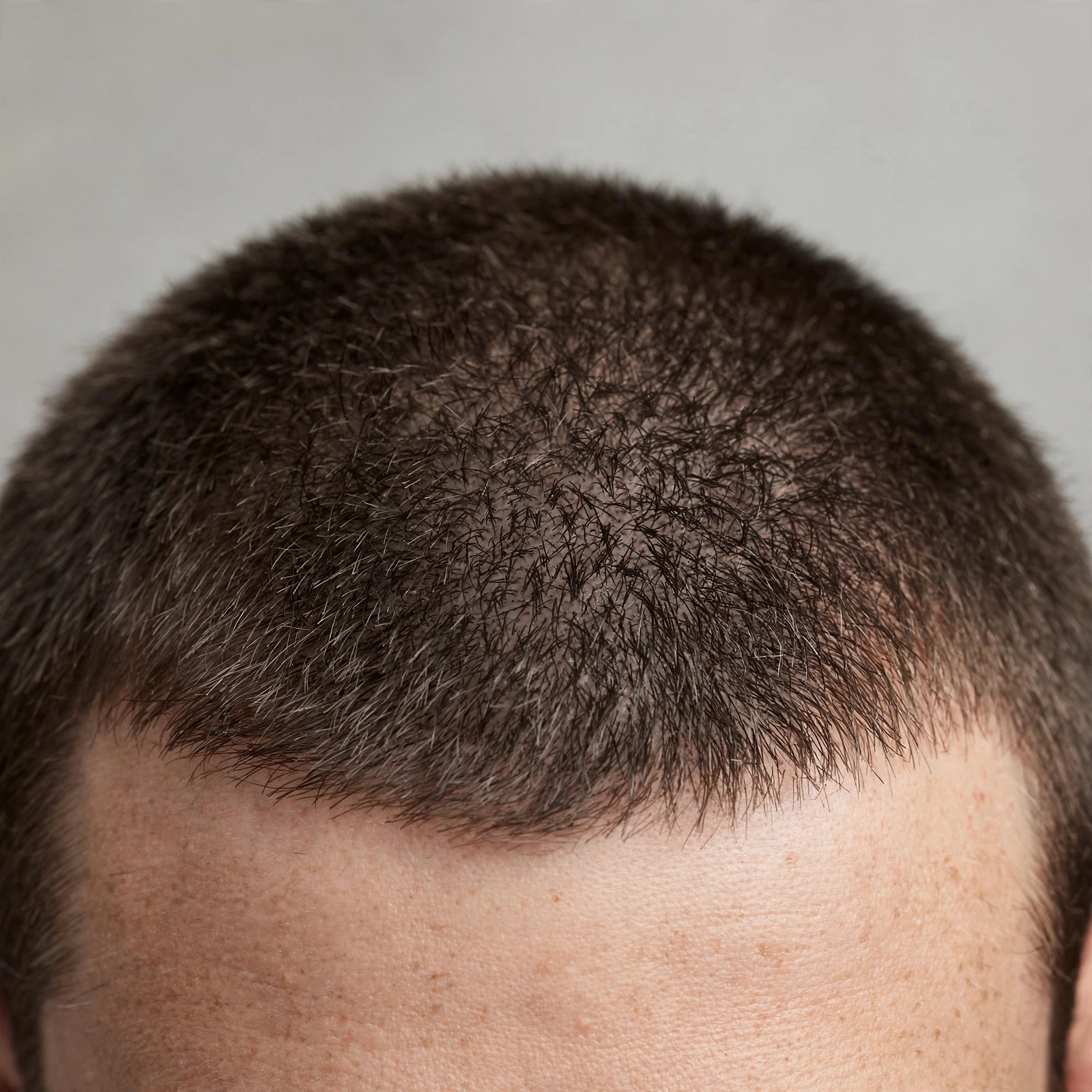
Quick Guide: Which Haircut Should You Choose?
Use this table as a starting point for your conversation with a barber, not as a promise, because your barber should assess your actual density and growth pattern before cutting.
| Haircut | Often worth considering for | Maintenance |
|---|---|---|
| Buzz Cut | Overall thinning; some receding patterns | Low |
| Induction Cut | Extensive thinning; overall thinning | Low |
| Crew Cut | Mild overall thinning; receding temples | Low–Medium |
| High and Tight | Overall thinning; receding temples | Medium |
| Shaved Head | Extensive thinning or a deliberate shaved look | Low |
| Caesar Cut | Receding hairline; some overall thinning | Low–Medium |
| French Crop | Receding hairline; fine hair with suitable density | Medium |
| Textured Crop with Low Fade | Fine hair; some overall thinning; crown thinning | Medium |
| Taper with Brushed-Forward Fringe | Receding hairline; mild overall thinning | Medium |
| Short Side Part | Mild thinning with enough density | Medium |
| Ivy League | Mild thinning; hair with enough top density | Medium |
| Short Slick Back with Taper | Mild thinning with enough density; receding temples | Medium |
| Short Textured Quiff | Mild thinning; fine hair with enough front density | Medium |
| Skin Fade with Messy Top | Overall thinning with enough top density | Medium |
| Bald Fade with Beard | Extensive thinning; beard framing | Medium |
How to Use This Guide at the Barber
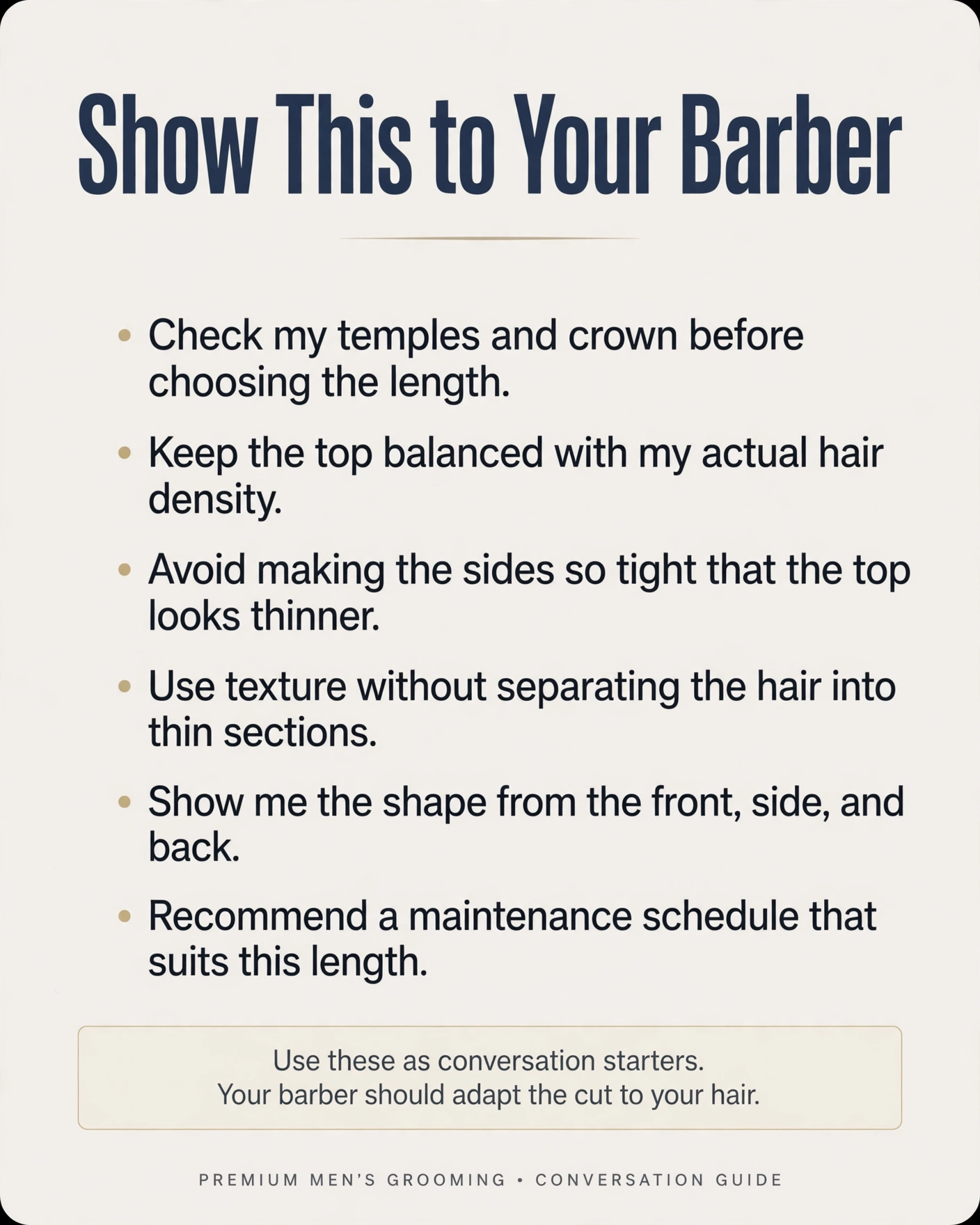
- Identify your main thinning pattern first, and tell your barber whether the temples, the crown, or the whole scalp has changed most.
- Take a clear reference image of the cut you like, and point out the length, the fringe, and the side height that matter most to you.
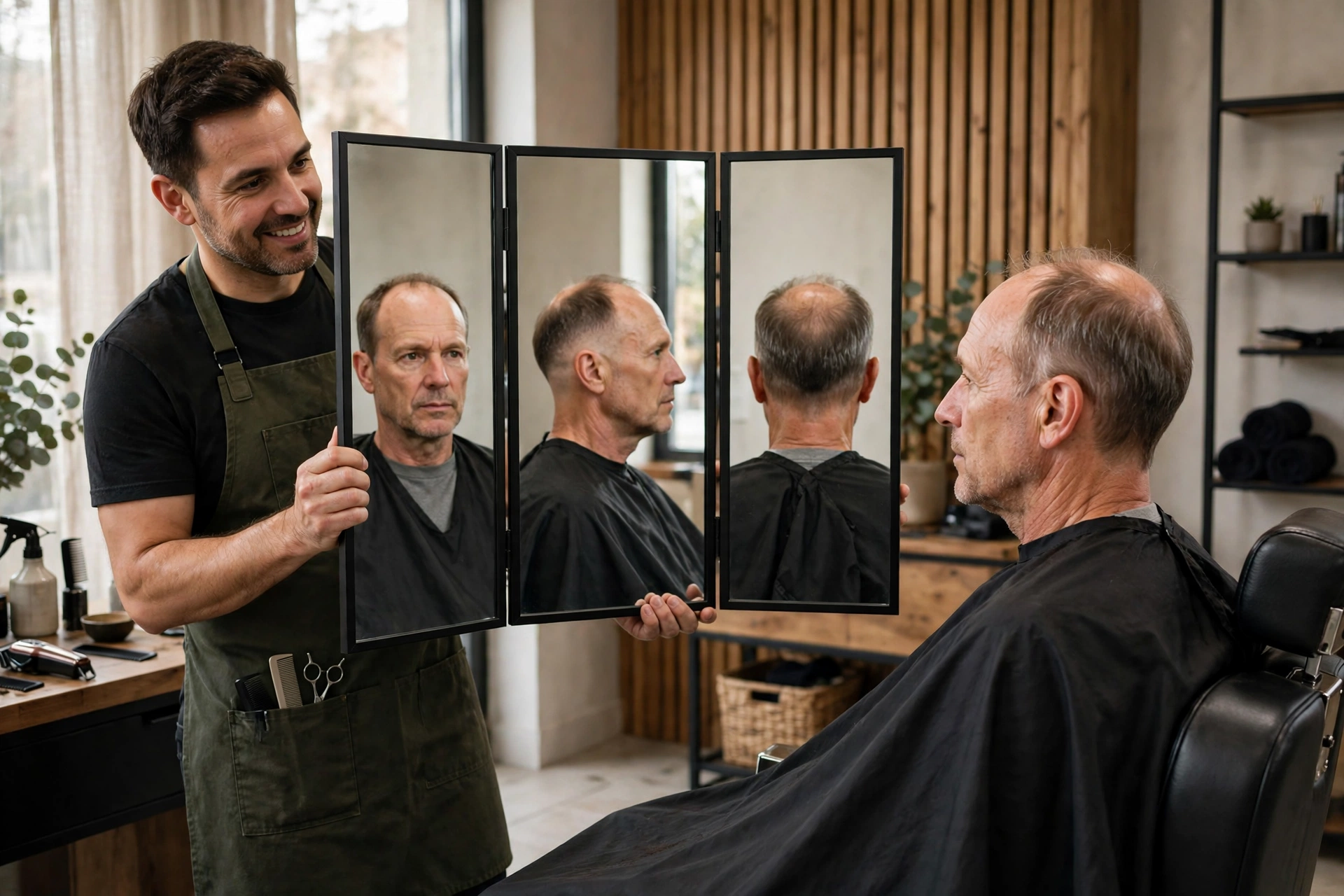
- Ask your barber to check your temples and crown before choosing a length, and to keep the top balanced with your actual density.
- Ask how the cut will look from the front, the side, and the back, because the back view is where crown thinning often shows first.
- Agree on a maintenance schedule before you leave, so you know how often the sides, the fringe, or the fade will need tidying.
What to Avoid
Short hair works best when it stays honest. A style that tries to cover a large thin area with long hair from one side usually draws more eyes to that area, not fewer.
A very tight slick back can also expose the full hairline in one sweep. It can still suit a man who owns the look, but it is not a good cover for a receding line.
Heavy wet gel is another trap. It clumps hair together and leaves gaps where the scalp shows through. A matte finish keeps hair separated and looks fuller in normal light.
Long hair that is left to grow without a trim can look thin at the ends. It also gets heavier, and heavy hair lies flatter on top.
How to Style Thin Hair in the Morning
Start with damp hair, not soaking wet hair. A small amount of matte clay or texture powder is enough for most short cuts.
Work the product through with your fingers. Keep the hair moving up and forward, not flat against the scalp.
Dry on low heat while lifting the roots with your fingers. High heat and a flat brush push hair down and make thin areas more visible.
Finish by checking the top in a mirror from above, not only from the front. That is the angle other people see most often.
How Often to Trim
Very short cuts lose their shape fastest. A buzz, induction, crew, high and tight, or shaved look usually needs a trim every 2 to 3 weeks to stay even.
Textured and classic cuts hold their shape a little longer. Most men can go 3 to 4 weeks between trims for a crop, side part, quiff, or slick back.
Ask your barber to note the guard or length he used. That one note makes the next visit much easier to repeat.
Before You Book: What to Tell Your Barber
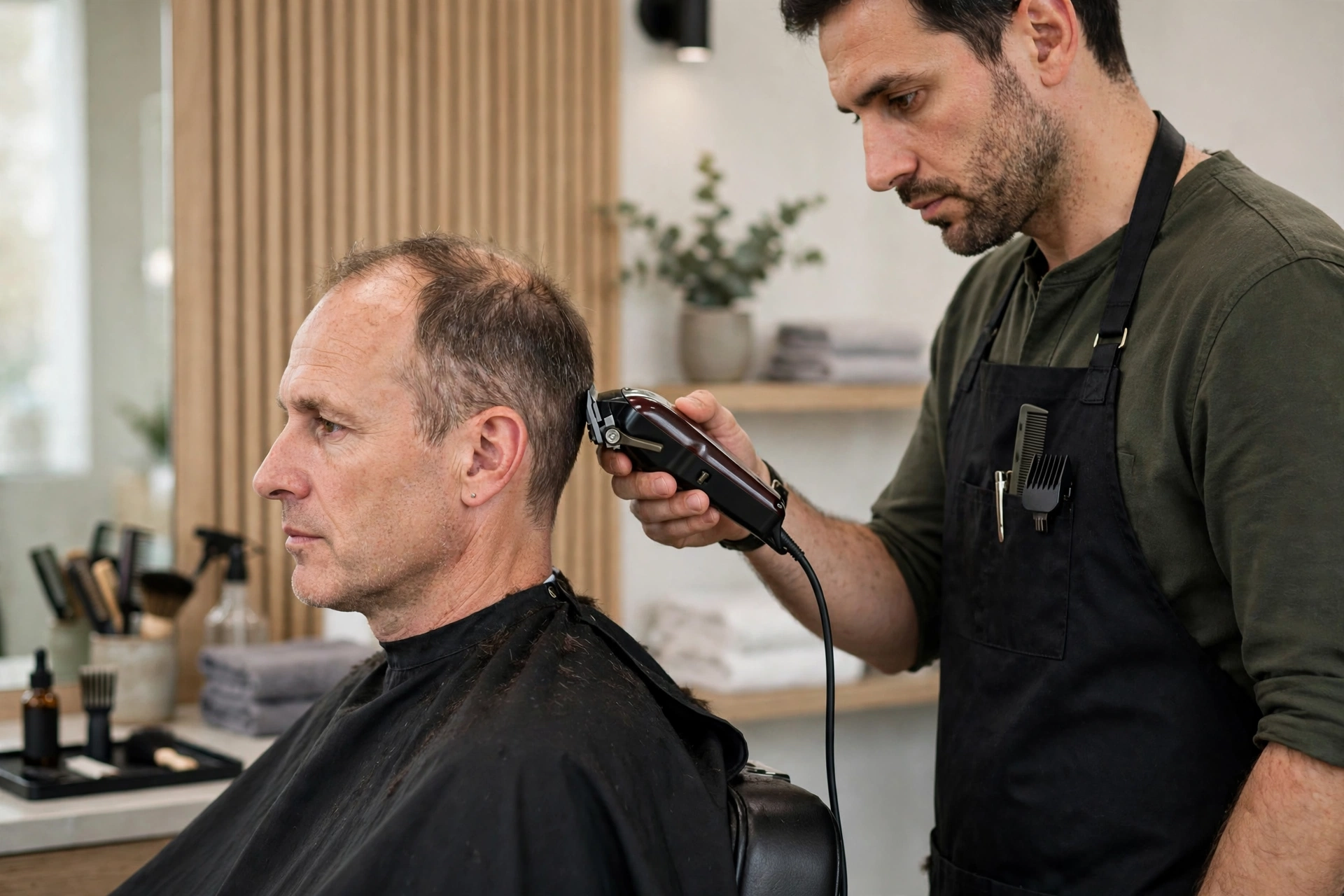
Tell your barber your pattern first, not only the cut name. Say whether your hair is receding at the temples, thinning at the crown, or thinner all over.
Show the 4 angle photos of the cut you like. A front photo alone does not show the back or the fade.
Ask how short the sides should be to match the top. When the sides are much longer than a thin top, the top looks thinner by contrast.
Haircuts and Styling Choices That Can Work Against Thinning Hair
Not every popular style suits every thinning pattern, and the same style can look different depending on density, texture, head shape, and execution.
Long comb-overs that separate into thin strands can make scalp visibility more obvious, because the hair is stretched across an area where density is lower.
An excessively long top with extremely short sides may create strong density contrast for the same reason, and that contrast is often the real problem rather than the style itself.
Heavy wet-look products can cause fine strands to clump together, which can expose more scalp than a dry and matte finish would.
Excessive height may expose a thin crown or make the top look less balanced, especially if the front is lifted while the crown stays flat.
A very high skin fade is not automatically the right choice for every thinning pattern.
A hard part may expose more scalp if the hair is sparse around the parting.
These are cautions to discuss with a barber, not rules that make a style wrong for everyone.
A good barber can often adapt a style rather than rule it out completely.
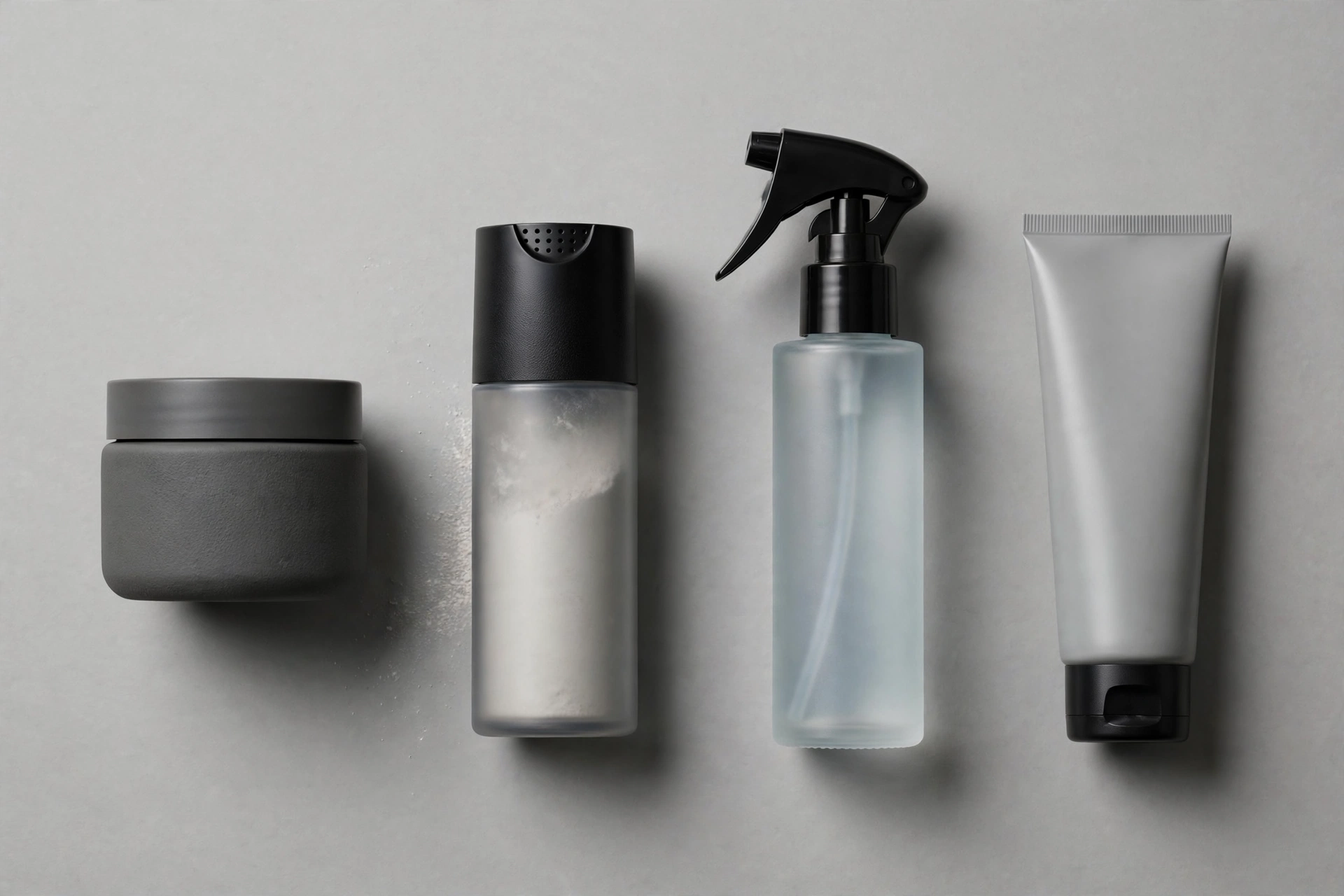
Best Styling Product Types for Men with Thinning Hair
Styling products change how hair looks for the day, and they are not hair-loss treatments.
So they do not regrow hair, stop shedding, or increase follicle density.
That limit is important to state plainly, because a product that helps with appearance can still be useful without being a treatment of any kind.
Texture powder can add a dry and textured finish and reduce the flat appearance of some hairstyles. Choosing tip: matte finish, light-to-medium hold, suits a short textured crop.
A small amount is usually enough to start with.
Avoid excessive buildup, because it can make fine hair feel gritty or look dull.
A light hand will usually give a cleaner result than a heavy application.
Matte clay can provide control and a low-shine finish. Choosing tip: matte finish, medium-to-strong hold, suits a short textured quiff or a French crop.
A lightweight formula may be easier to use on fine hair than a heavy and sticky product, which can pull strands together.
Sea salt spray can add texture and a slightly rougher finish, although results vary by hair type, and some formulas can feel drying. Choosing tip: matte, textured finish, light-to-medium hold, suits a skin fade with a messy top.
Start with a small amount on damp or dry hair and see how your hair responds, rather than applying a large amount on the first try.
Lightweight styling cream may suit men who want a softer finish and less hold. Choosing tip: natural, low-shine finish, light hold, suits a short side part or an Ivy League.
It can be a useful option for side parts, tapers, and Ivy League styles where a natural and controlled look matters more than strong hold.
If products are recommended later on this site, selection criteria will be explained and any affiliate relationships will be disclosed where applicable.
When Should You See a Dermatologist About Thinning Hair?
A haircut can change appearance, but it cannot identify or treat the cause of hair loss, and that boundary should stay clear throughout this guide.
Consider speaking to a dermatologist if you notice sudden or rapid hair loss, patchy bald areas, sudden shedding in clumps, scalp pain, itching, redness, scaling, or other unusual symptoms, or hair loss that is progressing quickly or causing concern.
A dermatologist can help assess the cause of hair loss and discuss options that are appropriate for the individual situation.
This article does not recommend prescription treatment and does not diagnose any reader.
This article provides grooming and styling information, not a medical diagnosis or treatment plan. A dermatologist can help assess the cause of hair loss.
Norwood Scale and Face Shape: A Short Visual Guide
This is a visual guide only, not a diagnosis. Use it to describe what you see in the mirror, then discuss the cut with your barber.
- Early stages 1-2: Thinning is mild, with a hairline that is mostly in place. Cuts already in this article that often suit this stage include the Short Side Part, the Ivy League, and the Short Textured Quiff.
- Receding/crown stage 3: The temples have moved back and/or the crown is thinner. Cuts already in this article that often suit this stage include the Caesar Cut, the French Crop, and the Taper with Brushed-Forward Fringe.
- Advanced stages 4-5: Recession and crown thinning are more visible. Cuts already in this article that often suit this stage include the Crew Cut, the Textured Crop with Low Fade, and the High and Tight.
- Extensive stages 6-7: Thinning is extensive across the top. Cuts already in this article that often suit this stage include the Buzz Cut, the Induction Cut, the Shaved Head, and the Bald Fade with Beard.
| Face Shape | Cuts that suit it | What to be careful with |
|---|---|---|
| Oval | Short Textured Quiff | Keep the top balanced so the face shape stays visible, rather than covering it with too much length. |
| Round | Textured Crop with Low Fade | Avoid a very round, full top that adds width; keep the sides tidy. |
| Square | Crew Cut | Avoid a very hard, boxy outline; ask your barber to soften the edges. |
| Longer/oblong | French Crop | Avoid too much height on top, which can lengthen the face; keep the fringe forward. |
These face-shape notes are visual guidance only.
Thinning Hair Myths, Corrected
- Myth: Shaving makes hair grow back thicker. Correction: Shaving does not change thickness, colour, or growth rate.
- Myth: A haircut can regrow hair. Correction: A cut changes appearance only.
- Myth: Long hair always hides thinning. Correction: Long hair can fall flat and show more scalp when parted.
- Myth: A wet, shiny finish hides thin areas. Correction: Shine can make scalp more visible, and a matte finish is usually cleaner for thin hair.
Find Your Cut in 5 Steps
- Find your pattern.
- Check your face shape.
- Pick the cut group.
- Tell your barber in short words.
- Keep the trim interval your barber recommends for that length.
Frequently Asked Questions
What is the best haircut for thinning hair?
The best cut is the one that matches your pattern and the density you have now. Short textured cuts suit most patterns, while very short cuts suit advanced thinning best.
Is a fade good for thinning hair?
A fade can help, because short sides reduce the contrast with a thin top. The fade should blend cleanly, not sit as a sharp line that draws eyes to one spot.
How do I ask my barber for a thinning hair cut?
Use simple words. Name your pattern, show photos from 4 angles, and ask for texture on top with sides that match your top density.
Does shaving my head stop hair loss?
No. Shaving changes how hair looks, not how it grows. It can still be a strong choice, because it removes the contrast between thick and thin areas.
Does a haircut make hair look thicker?
A good cut can make hair look fuller, because texture and shorter sides create the illusion of density. No cut creates new hair.
How often should I trim thinning hair?
Very short cuts every 2 to 3 weeks, textured and classic cuts every 3 to 4 weeks. A fresh shape keeps thin hair looking intentional.
Sources
- American Academy of Dermatology — Hair loss: Signs and symptoms — Supports the visual description of hair-loss patterns in this article.
- Mayo Clinic — Shaving hair: Does shaved hair grow back thicker? — Supports the correction that shaving does not change thickness, colour, or growth rate.
- Google Search Central — Helpful, reliable, people-first content — Supports writing clear, people-first guidance for readers.
- Google Search Central — Image SEO best practices — Supports using clear, descriptive images with useful alt text.
Pick the cut that fits the hair you have today, keep it trimmed, and style it matte and light. That is what makes thinning hair look like a choice, not a problem to hide.
Choose a Haircut That Works With Your Hair
Start by identifying your thinning pattern, then choose a style that works with the density you have, not against it, because that one decision shapes everything else.
Take a clear reference image to the barber, ask for a cut that balances the front, top, sides, and crown, and discuss maintenance before you leave the chair.
Use styling products for appearance only, not as a treatment for hair loss, and keep the conversation open about temples, crown, density, and daily styling.
A good barber conversation is often what turns a reasonable haircut into the right one for you.
It is worth taking a few extra minutes to get that part right.